
Ghana has recorded at least 13 university student deaths since 2024 as campus safety fears mount
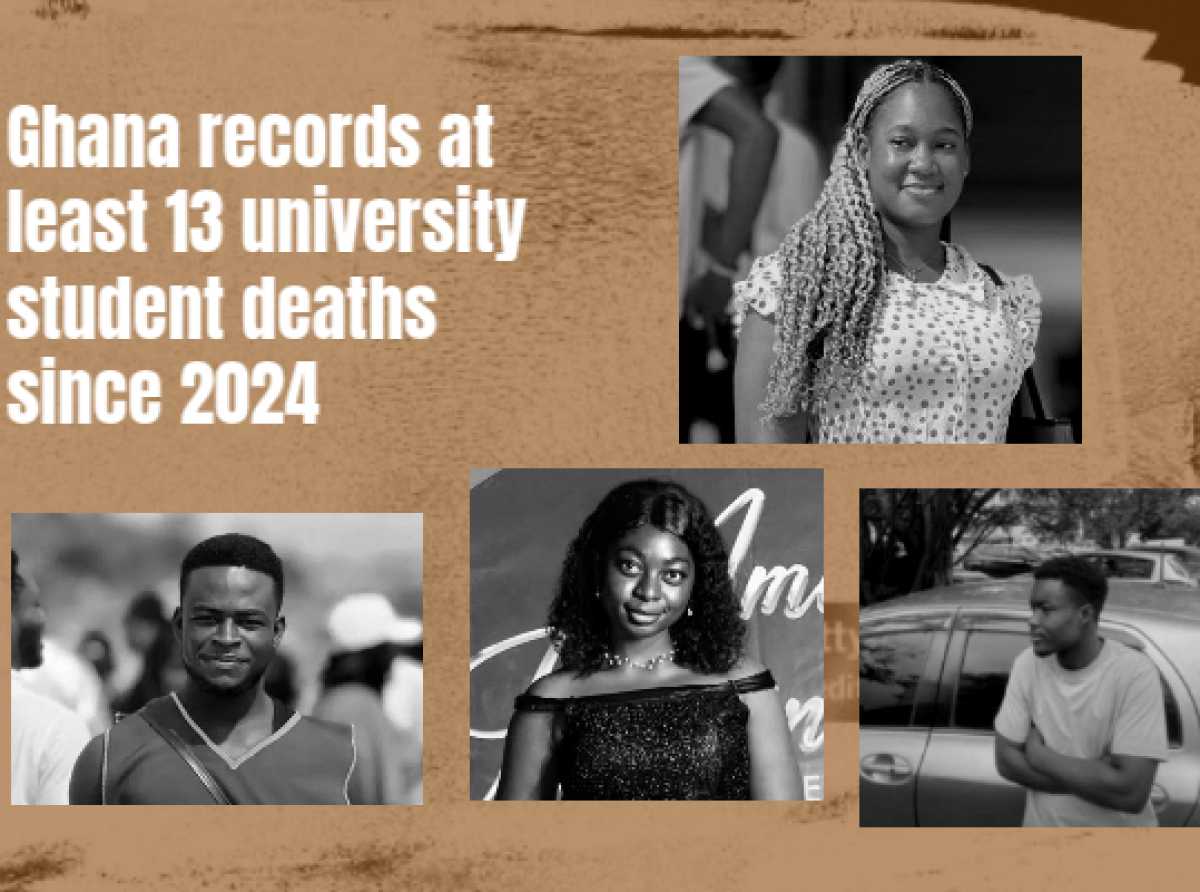
At least 13 students across Ghana's public universities have lost their lives from non-natural causes since the beginning of 2024, sparking growing concerns over student safety, mental health support, campus security, and road safety within tertiary institutions.
The deaths, which occurred at some of Ghana's largest universities, including the University of Ghana, Kwame Nkrumah University of Science and Technology, University of Cape Coast, and University of Education, Winneba, stem from road accidents, suspected murders, suicides, drownings, and other incidents that occurred both on and off campus.
While the figures are based on publicly reported cases and do not constitute an official national database, they highlight a troubling pattern that has intensified calls for stronger student protection measures and improved mental health interventions.
Available records indicate that six students died in 2024, making it the deadliest year for reported non-natural student deaths during the period under review.
The number declined slightly to four reported deaths in 2025, while three deaths have already been recorded in the first half of 2026.
Education stakeholders warn that the actual figure may be higher, as Ghana currently lacks a centralized database tracking student deaths across tertiary institutions.
Many incidents that occur off campus or involve ongoing investigations may never be formally documented in publicly accessible records.
Road traffic accidents accounted for the largest share of reported student deaths.
Several students were killed while commuting to lectures, crossing roads near campus, or travelling between academic activities.
Among the victims was first-year Business Administration student Priscilla, who was fatally struck by a speeding vehicle at Ayeduase near KNUST in February 2024. The driver reportedly fled the scene, and no publicly available update has been provided on the outcome of investigations.
In July 2024, KNUST student Adzo Ahadzie lost her life after being knocked off a bicycle by a vehicle on a campus road.
Another KNUST student, Afia Dedaa Osae-Atuah, died in December 2024 after being hit by a speeding commercial vehicle. The incident, captured on CCTV footage, sparked renewed debate over road safety around university campuses.
At the University of Cape Coast, student Kweku Mensah died in March 2026 after a motorcycle collision involving a bus on campus. Investigations remain ongoing.
Some of the deaths involved suspected criminal acts that generated widespread national attention.
One of the most high-profile cases was the death of Joana Deladem Yabani, a final-year KNUST student whose body was discovered near a campus building in February 2025.
Investigators concluded that she had been strangled, leading to the arrest and prosecution of her boyfriend, who has since been charged with murder. The case continues to move through the judicial process while awaiting advice from the Attorney-General's Department.
In April 2024, an unnamed student from the University of Energy and Natural Resources (UENR) was reportedly killed during a suspected armed robbery attack while returning from a field trip. Authorities later announced the arrest of a suspect, while counselling services were offered to surviving students.
Suicides have emerged as another troubling trend within Ghana's tertiary institutions.
In April 2025, a first-year student at the University of Education, Winneba, was found dead after reportedly taking his own life in a hall of residence.
A separate suicide involving a student at Sunyani Technical University was also reported during the same year.
Mental health advocates and student leaders have repeatedly expressed concern about increasing psychological pressures facing students, including academic stress, financial hardship, relationship challenges, and anxiety about future employment opportunities.
The incidents have intensified calls for universities to expand counselling services, strengthen peer support systems, and improve access to mental health professionals.
Among Ghana's public universities, KNUST has recorded the highest number of reported student deaths during the review period.
Between late 2024 and early 2025 alone, the institution experienced four separate student fatalities involving road accidents and violent crime.
The concentration of incidents prompted calls for stronger campus security, improved traffic management, and enhanced surveillance systems around student residences and academic facilities.
University authorities have since introduced several safety initiatives, although concerns among students remain.
The most recent case to capture nationwide attention is the death of 20-year-old University of Cape Coast student Innocentia Avinu.
The Level 200 Bachelor of Commerce student was reported missing on June 11, 2026, after leaving her hostel to meet an individual off campus.
Her body was discovered at Hutchland Beach near Cape Coast the following day.
The case sparked widespread public concern and speculation on social media, with police later dismissing claims that parts of her body had been removed.
Authorities confirmed that an initial examination revealed no visible signs of assault, though a post-mortem examination is expected to determine the exact cause of death.
On June 15, the Ghana Police Service announced the arrest of a 39-year-old man identified as Michael Mensah, who investigators say picked up the student from her hostel and drove her to the beach where she was last seen alive.
Police say investigations remain ongoing.
The rising number of student deaths has renewed debate about the adequacy of safety measures across Ghana's universities.
Student groups and education advocates are calling for:
- Improved campus security systems
- Increased police visibility around universities
- Better street lighting and surveillance infrastructure
- Enhanced mental health and counselling services
- Road safety interventions on and around campuses
- Stronger partnerships between universities and law enforcement agencies
Many believe a coordinated national strategy is needed to protect students and address the underlying factors contributing to preventable deaths.
In response to the incidents, affected institutions have generally launched investigations, cooperated with law enforcement agencies, conducted post-mortem examinations, and expanded counselling support for students.
Following the death of Innocentia Avinu, Education Minister Haruna Iddrisu directed a full and transparent investigation and instructed the University of Cape Coast to work closely with the Ghana Police Service.
University authorities have also indicated that security arrangements at campuses and hostels are being reviewed to strengthen student protection.
As investigations continue into several of the reported cases, education stakeholders say the growing number of fatalities underscores the urgent need for comprehensive reforms aimed at making Ghana's universities safer environments for learning and personal development.

Aikines Anyomi

News
Food
Politics
Technology
About Us
Download Our Mobile App

