
Gov’t sets up committee to address rising hostel accommodation fees nationwide
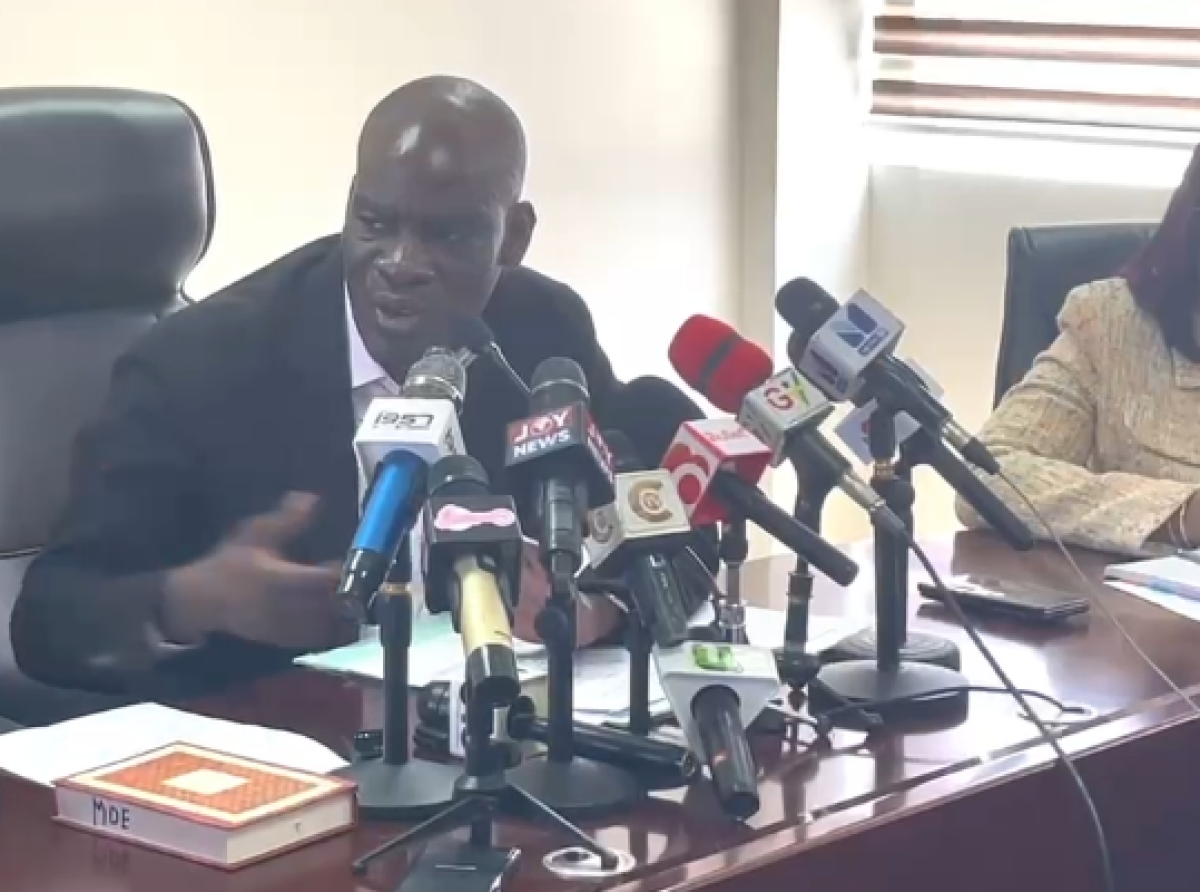
The government has established a multi-stakeholder committee to tackle growing concerns over increasing hostel accommodation fees in Ghana’s tertiary education sector.
The committee brings together the Ministry of Education, the Ghana Education Service, university authorities, and the Ghana Tertiary Education Commission to engage stakeholders and develop solutions to the escalating cost of student accommodation.
The move comes amid rising public complaints about hostel fee adjustments across universities and colleges, particularly in cases involving private developers partnering with public institutions.
Speaking at the inauguration of governing councils for the Jasikan College of Education and the University of Engineering and Agricultural Sciences on Tuesday, May 11, the Education Minister cautioned that private participation in hostel development must not lead to excessive or unaffordable charges for students.
He stressed that while private partnerships are important in expanding infrastructure, they must be guided by public interest and social responsibility.
According to him, government will not allow education-related infrastructure partnerships to operate without safeguards to protect students from exploitative pricing.
He explained that the newly formed committee—comprising the Ministry of Education, GTEC, and vice-chancellors of universities—will continue consultations aimed at finding an amicable and sustainable solution to the issue of hostel fee increases.
The minister emphasised that all decisions in the tertiary education space must reflect broader social and economic realities affecting students and families across the country.
He further assured that government remains committed to ensuring a socially responsible approach in the delivery of public goods, particularly within the education sector.
Beyond the hostel fee concerns, the minister also provided updates on ongoing expansion plans in Ghana’s higher education system.
He announced that the University of Engineering and Agricultural Sciences is expected to admit its first batch of 800 students by October this year, marking a major milestone in the government’s tertiary education expansion agenda.
The minister also revealed that plans are underway to establish additional public universities in other parts of the country, including proposals for a new institution in the Western North Region.
He noted that these proposals will be submitted to Cabinet and the President for policy direction through the appropriate approval processes.
Addressing concerns from residents of the Western North Region, the minister assured them that they are not being excluded from government’s university expansion plans and remain part of ongoing national considerations.
Education stakeholders have welcomed the committee’s formation, noting that rising accommodation costs have become a major barrier for many students, particularly in urban-based universities where demand for housing far exceeds supply.
Analysts say the success of the initiative will depend on how effectively government balances private sector participation with affordability and accessibility for students.

Aikines Anyomi
Author’s Posts
-
East Legon businessman arrested over alleged drug-facilitated sexual abuse and non-consensual video sharing
The Cyber Crime Unit of the
Level 100 students raise concerns over delayed ‘No-Fees-Stress’ refunds
Some Level 100 students under the 2026 beneficiary batch of the government’s no-fees-stress policy ...
May 12, 2026
-
WAEC confirms arrest of 43 teachers over BECE exam malpractice
The
May 12, 2026
-
Afenyo-Markin: NDC promised energy sector reforms but increased tariffs instead
Minority Leader
Black Stars can exceed expectations at the 2026 World Cup – Afenyo-Markin
Minority Leader

News
Food
Politics
Technology
About Us
Download Our Mobile App

