The Ghana Education Service (GES) has officially approved the release of long-awaited funds earmarked for the procurement of perishable food items for Senior High Schools and Technical Schools (SHTS) across the country, in a move aimed at stabilising the Free Senior High School (Free SHS) feeding programme.
The Conference of Heads of Assisted Secondary Schools (CHASS) has expressed confidence that the ongoing food funding crisis affecting senior high schools across Ghana will be resolved through stakeholder engagement, despite growing concerns about potential disruptions to academic activities.
Speaking on JoyNews Desk, CHASS National Secretary, Primus Baro, adopted a calm and conciliatory tone, emphasising the organisation’s commitment to dialogue rather than confrontation.
“We hope, like how we have been able to manage all stakeholders — CHASS, government — and have been able to manage similar issues over the past, we will also manage the same so that we will stay smoothly across the river,” he stated.
The comments come amid mounting anxiety among school administrators over delays in government funding for food supplies and other essential operational needs in second-cycle institutions.
The situation has raised fears that some schools could face serious challenges in sustaining feeding programmes, which are critical to student welfare under Ghana’s education system.
Tensions escalated following a stakeholder meeting convened by the Minister for Education, Haruna Iddrisu, which ended without a clear financial resolution. The outcome left many school heads uncertain about how to manage immediate operational demands.
Mr Baro was quick to clarify that CHASS does not have the authority to shut down schools, distancing the organisation from suggestions that closures could be imminent.
“The communication of CHASS is not that we are going to shut down schools. We don’t shut down schools. We only advise,” he explained.
He stressed that CHASS operates primarily as an advisory and coordinating body, guiding school heads while engaging government and other stakeholders to find workable solutions.
According to Mr Baro, CHASS has historically relied on collaboration and negotiation to resolve challenges within the education sector, avoiding actions that could disrupt the academic calendar.
He maintained that while the current situation is serious, there is strong confidence within the organisation that ongoing discussions will lead to a resolution.
The organisation is “very much convinced” that the issue will be addressed, he noted, although no specific timeline has been provided.
The food funding crisis is not new and has become a recurring issue under the Free Senior High School policy. School heads have consistently cited delayed disbursements as a major challenge affecting:
Student feeding programmes Procurement of essential supplies Day-to-day school administration
These funding delays have periodically strained school operations, prompting repeated calls for more predictable and timely financial support from government.
While uncertainty remains, CHASS’s stance suggests that schools are unlikely to take drastic measures in the immediate term. Instead, the focus remains on sustained engagement with government to secure the necessary funding and ensure continuity in academic activities.
The coming weeks are expected to be critical as stakeholders work toward a resolution that safeguards both student welfare and the stability of Ghana’s education system.
Clement Apaak, Deputy Minister for Education, has underscored the growing role of Ghana’s universities as key drivers of national transformation through research, innovation, and strategic global partnerships.
The Governing Council of the University for Development Studies (UDS) has appointed Professor Mohammed Muniru Iddrisu as the institution’s new Vice-Chancellor, marking a key leadership transition at one of Ghana’s leading public universities.
The Ghana Scholarships Authority has officially announced the release of first-quarter funds aimed at settling outstanding scholarship arrears owed to Ghanaian students studying abroad. The development comes amid growing concerns over delayed payments that have affected numerous beneficiaries across different countries.
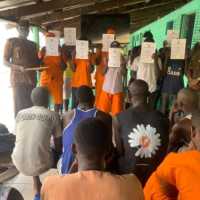
Fourteen inmates of the Tamale Central Prison have successfully passed the National Vocational Training Institute Proficiency Grade II examinations, marking a significant milestone in ongoing rehabilitation efforts within the facility. The achievement reflects growing emphasis on skills development as a core component of prison reform in Ghana.
Pentecost University has signed a strategic Memorandum of Understanding (MoU) with the Ghana Prisons Service to strengthen rehabilitation and capacity-building programmes for inmates across the country. The partnership reflects growing efforts to reform Ghana’s correctional system through education and skills development.
The agreement, formalised on Wednesday, April 15, 2026, seeks to establish a long-term framework for collaboration between the university and the Prisons Service, with a focus on skills training, reformation initiatives, and inmate empowerment. The initiative is expected to support the transition of inmates from incarceration to productive participation in society.
Speaking at the signing ceremony, the Dean of Theology at Pentecost University, Emmanuel Anim, emphasised the need for deliberate and innovative approaches to prison reform. He highlighted the importance of education, mentorship, and structured programmes in transforming the lives of inmates.
He noted that incarceration should be viewed as a social process that requires structured interventions aimed at transformation and reintegration. According to him, without such interventions, many inmates face challenges reintegrating into society after serving their sentences.
He described the partnership as a practical blueprint for sustained cooperation between academia and state institutions in addressing rehabilitation challenges within correctional facilities. The collaboration is expected to introduce new models for prison education and vocational training in Ghana.
On her part, the Director-General of Prisons, Patience Baffoe-Bonnie, identified capacity building as one of the key challenges facing the Service. She explained that limited resources and training opportunities have historically constrained rehabilitation efforts.
She said the collaboration would help develop tailored training programmes for inmates, with emphasis on practical skills acquisition and improved production methods within prisons. These programmes are expected to include vocational training, entrepreneurship development, and technical skills.
She further explained that the initiative would support efforts to introduce certified training programmes, enabling inmates to obtain recognised qualifications that can improve their chances of reintegration into society after serving their sentences. Such certification is seen as critical in reducing recidivism and improving employment prospects.
As part of the agreement, a joint steering committee will be established to oversee implementation and ensure the sustainability of the programme. The committee will be responsible for monitoring progress, evaluating outcomes, and making necessary adjustments to improve effectiveness.
Pentecost University officials expressed appreciation to the Prisons Administration for its commitment to reform, describing the partnership as a significant step toward strengthening collaboration between higher education and correctional services in Ghana. The initiative is expected to serve as a model for similar partnerships in the future.
A total of 473,658 final-year senior high school students from Ghana are set to join their counterparts from four other West African countries to sit the 2026 May–June West African Senior School Certificate Examination (WASSCE) for School Candidates.
Education policy think tank Africa Education Watch has raised concerns over what it describes as persistent inefficiencies in Ghana’s teacher deployment system, warning that rural schools continue to face severe staffing shortages despite an apparent national surplus of teachers.
The Minister for Education, Haruna Iddrisu, has disclosed that more than 40,000 applicants submitted entries through the national teacher recruitment portal for just 7,000 available vacancies, highlighting both the high demand for teaching jobs and the existing gaps in Ghana’s education sector.

_thumbnail.jpg)
_thumbnail.jpg)



_thumbnail.jpg)
_thumbnail.jpg)