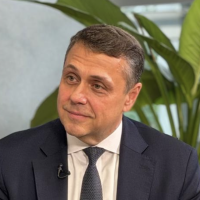
Kristalina Georgieva, Managing Director of the International Monetary Fund (IMF), announced today her intention to appoint Zeine Zeidane as the next Director of the IMF’s African Department (AFR). Mr. Zeidane will succeed Abebe Aemro Selassie, who is set to retire from the Fund on May 1, 2026.
The Chief Executive of the National Petroleum Authority (NPA), Godwin Edudzi Tamakloe, has issued a strong warning to district assemblies across Ghana, stating that any assembly that continues to collect levies from illegal mining operators—commonly associated with galamsey—after a presidential directive to halt the practice would be engaging in outright defiance. He described such actions as a “grievous matter” that must be addressed decisively.
Ghana’s airport tax revenue has fallen short of expectations, dropping by GH₵400 million and missing the 2025 target by approximately 20 per cent. The Ministry of Finance’s latest data, analysed by JoyNews Research, shows that the government had projected nearly GH₵2 billion in airport tax inflows, targeting GH₵1.95 billion, but realised only about GH₵1.56 billion, resulting in the significant shortfall.
Managing Director of GCB Bank, Farihan Alhassan, has attributed the bank’s record-breaking performance in 2025 to its strong brand culture and the dedication of its workforce.
Parliament’s Public Accounts Committee (PAC) has summoned former Minister of Health, Dr. Bernard Okoe-Boye, over the payment of GH¢20 million as mobilisation funds for a Parliamentary Service Hospital project despite no work done. The development has intensified scrutiny over public spending and project execution within the health sector, particularly concerning large-scale infrastructure projects funded with public resources.
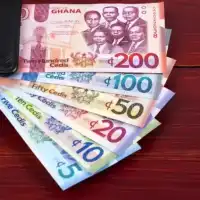
Ghana enters the second quarter of 2026 with the Ghana cedi navigating a controlled but pressure-sensitive foreign exchange landscape, reflecting a delicate balance between policy discipline and market realities. The environment is marked by bureau premiums, tighter spreads at commercial banks, and a cautious upward adjustment from the Bank of Ghana, signaling careful management amid ongoing liquidity pressures.
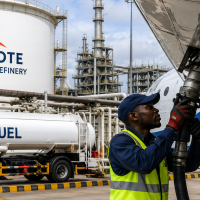
Some OMCs Increase Fuel Prices Ahead of April 1 Adjustment Following NPA Price Floor
Several Oil Marketing Companies (OMCs) in Ghana have begun increasing pump prices ahead of the official April 1–15, 2026, adjustment window under the Price Deregulation Policy.
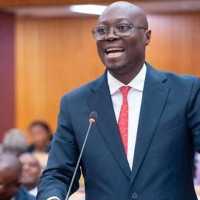
Former Information Minister and Kojo Oppong Nkrumah has strongly criticised the decision by Parliament’s Majority side to block a proposed inquiry into the controversial Gold-for-Reserves programme. The Offoase-Ayirebi MP described the move as a serious setback for parliamentary oversight and accountability in Ghana.
Mr. Oppong Nkrumah, who also serves as Ranking Member on Parliament’s Economy and Development Committee, was the originator of the motion seeking a comprehensive investigation into the programme, which has been implemented by the Bank of Ghana since 2021.
The motion, debated on Friday, March 27, 2026, aimed to examine the programme’s design, operational procedures, financial performance, and cost structure. Introduced under the previous administration, the Gold-for-Reserves initiative is intended to boost foreign exchange reserves, stabilise the cedi, and reduce Ghana’s reliance on external currencies by leveraging the country’s gold resources.
Historically, Ghana has relied on commodity exports such as cocoa, dating back to 1897, to accumulate foreign exchange. The Gold-for-Reserves programme marked a shift by making gold a central instrument in modern reserve-building strategies. Oppong Nkrumah highlighted that the initiative has become one of the most significant contributors to Ghana’s foreign exchange accumulation in recent economic history.
Despite this, the Majority side rejected the motion via a voice vote, effectively halting a formal parliamentary inquiry. Mr. Oppong Nkrumah described the decision as “bizarre” and argued that the inquiry would have allowed Parliament and the Ghanaian public to gain a clearer understanding of the programme’s performance, including claims of a $214 million loss recorded in 2025.
Concerns About Financial Transparency and Cost Efficiency
Oppong Nkrumah raised questions about the programme’s cost structure, alleging that approximately 15 per cent of every $10 million released by the Bank of Ghana in 2025 was lost to handling, transactional, and related charges. He insisted that such figures require a thorough parliamentary investigation to assess efficiency and identify potential corrective measures.
He also questioned the management of the gold reserves, noting that around 50 per cent of gold acquired under the programme was sold in the fourth quarter of 2025. This occurred even as calls for a parliamentary inquiry were being made, and the MP described the timing as illogical, particularly given subsequent government plans to repurchase gold at higher prices.
Potential Links to Illegal Mining
Another major issue highlighted by Oppong Nkrumah concerns the sourcing of gold, particularly in the context of illegal small-scale mining, commonly known as galamsey. While official figures suggest that 60 per cent of Ghana’s gold exports come from small-scale mining, experts estimate that up to 80 per cent of this segment may involve illegal activities. He warned that without proper oversight, the Gold-for-Reserves programme could inadvertently rely on gold sourced through illegal channels.
The Minority MP accused the Majority of prioritising political narratives over fact-based oversight. “It is obvious that the Majority side has chosen partisanship over Ghana’s best interest. They prefer propaganda to facts,” he said.
Commitment to Accountability
Despite the setback, Oppong Nkrumah confirmed that the Minority side would not abandon efforts to ensure accountability. He pledged to pursue alternative avenues and suggested that a future Parliament with a different composition could revisit the inquiry. “There is no statute of limitations on matters such as this,” he emphasised.
The rejection of the motion leaves key questions unanswered regarding the Gold-for-Reserves programme, including its true financial performance, cost efficiency, long-term sustainability, and potential links to illegal mining. Analysts and citizens alike are left waiting for clarity on a programme that has played a pivotal role in Ghana’s modern foreign exchange strategy.
The Institute of Economic Research and Public Policy has criticised what it describes as a contradiction in the anti-corruption agenda of the government led by John Dramani Mahama, questioning the rationale behind recent policy decisions.
The Government of Ghana is preparing to introduce a new Loans Act aimed at tightening controls on public borrowing and ensuring that all contracted debt delivers measurable value to the economy.
The Government of Ghana has announced plans to borrow fresh debt amounting to GH¢15.231 billion through treasury bills and bonds between March and June 2026. The initiative aims to support budget implementation while rolling over existing debt maturities.
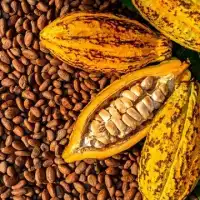
Wisdom Kofi Dogbey, Managing Director of the Cocoa Marketing Company (CMC), has visited the West Africa Mills Company (WAMCO) to evaluate the preparedness of cocoa processing firms ahead of a major government directive requiring that at least 50% of Ghana’s cocoa be processed locally.
The Roads and Transport Committee of Parliament has confirmed that Ghana’s electronic road toll system is expected to be fully operational by the fourth quarter of 2026, as authorities move to restore a critical source of revenue for road maintenance and infrastructure development.