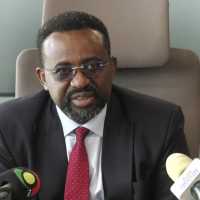
Former Western Regional Minister Kwabena Okyere Darko-Mensah has been discharged by the court after testifying as the third defence witness in the ongoing trial involving Bernard Antwi Boasiako, popularly known as Wontumi.
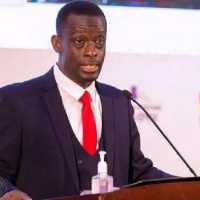
Former Western Regional Minister Kwabena Okyere Darko-Mensah has been discharged by the court after testifying as the third defence witness in the ongoing trial involving Bernard Antwi Boasiako, popularly known as Wontumi.
Majority Chief Whip and South Dayi MP, Rockson Nelson Dafeamekpor, has reaffirmed President John Dramani Mahama’s commitment to signing the Human Sexual Rights and Family Values Bill once parliamentary processes are fully completed.
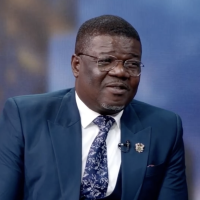
Cabinet has approved sweeping reforms to Ghana’s decentralisation framework, including plans to replace the appointment of Metropolitan, Municipal and District Chief Executives (MMDCEs) with a system that allows citizens to elect them directly on a non-partisan basis.
_thumbnail.jpg)
President John Dramani Mahama has issued a stern warning to public officials implicated in financial irregularities uncovered in Auditor-General’s reports, declaring that those found culpable will be compelled to refund misappropriated state funds or face imprisonment.
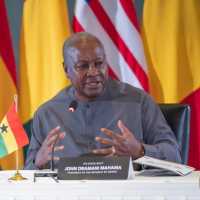
President John Dramani Mahama has strongly condemned the recent wave of xenophobic attacks in South Africa, describing the incidents as unfortunate and inconsistent with the vision of African unity and integration championed across the continent.
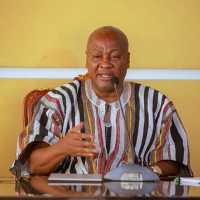
The Council of Elders of the National Democratic Congress (NDC) has directed all party members, groups, and interest blocs to immediately stop any form of presidential campaign activity, warning that no such exercise has been sanctioned under the party’s constitution.
.svg_thumbnail.png)
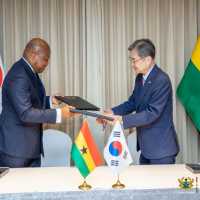
Ghana and South Korea have signed a historic visa waiver agreement for holders of diplomatic and service passports, marking a major milestone in nearly five decades of diplomatic relations between the two countries.
The agreement was announced by Foreign Affairs Minister Samuel Okudzeto Ablakwa on Monday, June 1, following its signing on the sidelines of the Africa-Korea Foreign Ministers Meeting.
According to Mr. Ablakwa, the deal is the first visa waiver agreement between Ghana and South Korea since the establishment of formal diplomatic ties almost 50 years ago. He revealed that discussions are ongoing to extend the arrangement to holders of ordinary passports in the future.
The minister noted that the agreement forms part of efforts to strengthen bilateral cooperation following President John Dramani Mahama’s working visit to South Korea earlier this year.
In a post on social media, Mr. Ablakwa described the development as a significant achievement in Ghana’s foreign policy agenda and a step towards deepening relations between the two countries.
Mr. Ablakwa also highlighted the successful revival of the Ghana-Jamaica Permanent Joint Commission for Cooperation (PJCC) after a 21-year break.
He commended Jamaica’s Foreign Minister, Senator Kamina Johnson Smith, for leading a high-level delegation to Ghana and praised her distinguished service as Jamaica’s first female foreign minister and the world’s longest-serving female foreign minister.
One of the key outcomes of the PJCC meeting was an agreement that will see approximately 400 Ghanaian nurses deployed to Jamaica to support healthcare delivery in the Caribbean nation.
The two countries also signed agreements covering defence cooperation and tourism development.
Additionally, Ghana and Jamaica have agreed to conclude ongoing negotiations to facilitate the deployment of Ghanaian teachers to Jamaica by August 2026.
Mr. Ablakwa described the growing demand for Ghanaian professionals abroad as a source of national pride and evidence of the quality of Ghana’s workforce.
The Foreign Affairs Minister also expressed appreciation for Jamaica’s support during the adoption of Ghana’s United Nations resolution recognising the transatlantic slave trade as the gravest crime against humanity.
He further noted that Jamaica had acknowledged Ghana’s humanitarian support following Hurricane Melissa, including the deployment of soldiers and relief assistance.
As part of efforts to deepen bilateral ties, Jamaican Prime Minister Andrew Holness has extended a special invitation to President Mahama to serve as guest of honour at Jamaica’s National Day celebrations later this year.
Mr. Ablakwa described the renewed momentum in Ghana-Jamaica relations as encouraging and reaffirmed Ghana’s commitment to strengthening cooperation with countries across Africa, Asia, and the Caribbean.
Former District Chief Executive (DCE) for Atiwa/Atiwa East in the Eastern Region, Kwabena Panin Nkansah, has passed away.
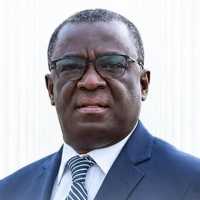
Member of Parliament for Okaikwei Central, Patrick Yaw Boamah, has called on Parliament to summon the Minister for Works and Housing to brief the House on the recurring flooding along the Accra-Cape Coast highway.According to the Minority MP, the persistent flooding during heavy rains continues to create serious difficulties for motorists and commuters using the stretch, with several vehicles often left stranded for hours.
Papa Kwesi Nduom, businessman and President of Groupe Nduom, has reaffirmed the group’s determination to resume operations following the Court of Appeal ruling restoring the licence of GN Savings and Loans.
Jerry Ahmed Shaib, Member of Parliament for Weija-Gbawe, has appealed for immediate government intervention to assist residents displaced by severe flooding caused by the controlled spillage of the Weija Dam.
_thumbnail.jpg)
The Ministry of Foreign Affairs has dismissed as false a widely circulated notice claiming that African nationals living in Cambodia, including Ghanaians, had been ordered to leave the country or face arrest and imprisonment.
Johnson Asiama, Governor of the Bank of Ghana, says Ghana now has an opportunity to move beyond economic recovery and build a foundation for sustainable growth, industrial competitiveness, and inclusive development.