President Mahama job approval hits record high as 7 in 10 Ghanaians back his performance — Global InfoAnalytics poll
_large.jpg)
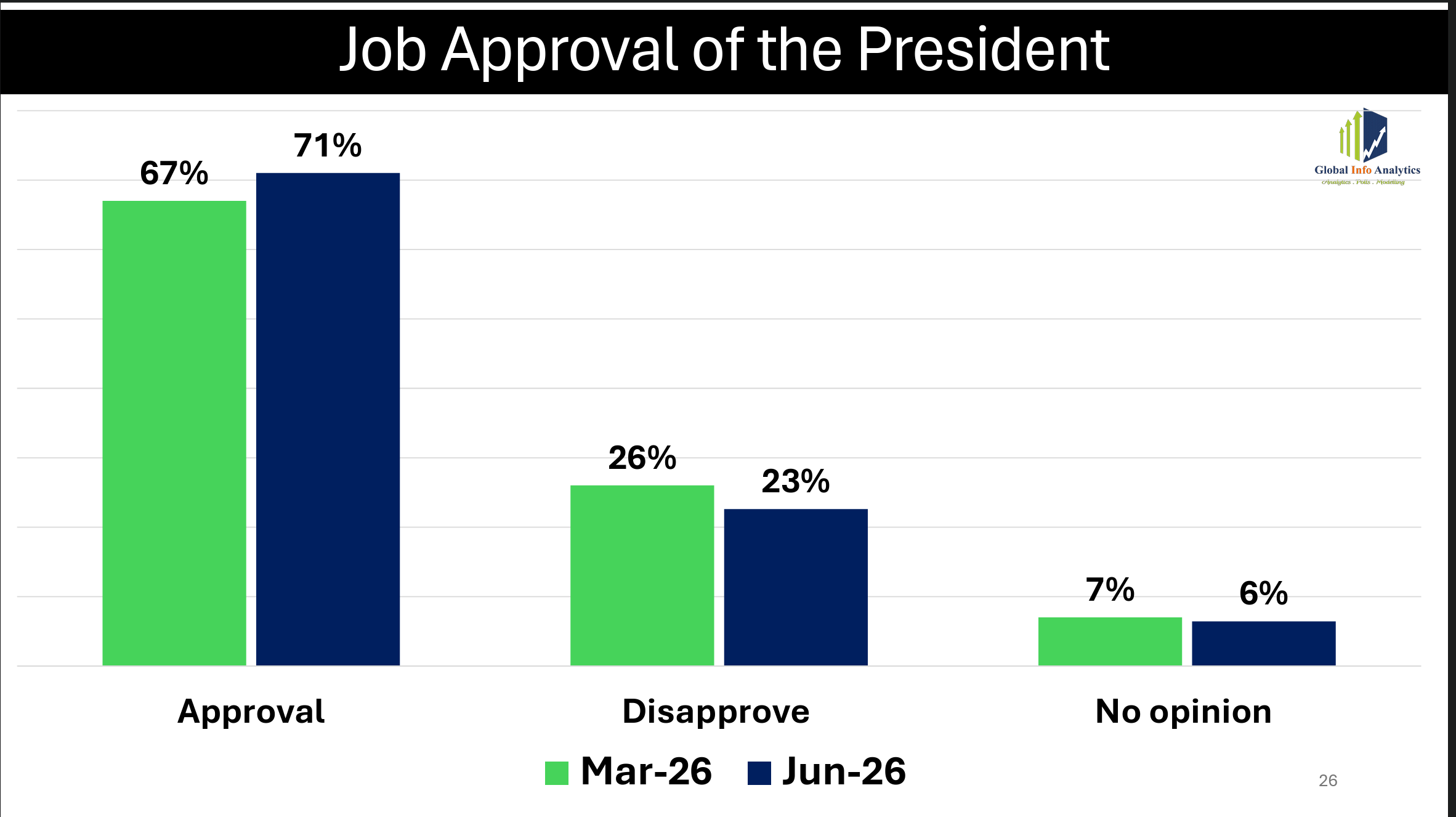
President John Dramani Mahama has recorded his highest approval rating since returning to office, with 71 percent of Ghanaians expressing satisfaction with his performance, according to the latest June 2026 National Tracking Poll conducted by Global InfoAnalytics.
The survey, released on June 15, 2026, indicates that public confidence in the President and his administration continues to strengthen, with approval ratings rising by four percentage points from the 67 percent recorded in March 2026.
According to the poll, only 23 percent of respondents disapprove of the President’s performance, while six percent remain undecided.
Executive Director and Lead Pollster at Global InfoAnalytics, Mussa Dankwah, described the result as a historic milestone, noting that it represents the highest presidential approval rating recorded in the firm’s regular national tracking polls since 2020.
“This is a new high for any president in our regular tracking poll since 2020,” he stated.
The findings reveal that President Mahama enjoys majority approval in all 16 regions of Ghana, highlighting broad national support that cuts across geographic and political boundaries.
The Savannah Region recorded the highest approval rating at 86 percent, followed by Western North with 82 percent.
Other regions also posted strong ratings, reflecting widespread confidence in the administration’s policies and governance approach.
In the Greater Accra Region, Ghana’s most populous region and political battleground, 73 percent of respondents approved of the President’s performance.
The Ashanti Region, traditionally regarded as a stronghold of the opposition New Patriotic Party (NPP), recorded a lower but still significant approval rating of 55 percent.
The lowest approval ratings were recorded in the Ahafo Region at 40 percent and the North East Region at 52 percent.
Despite these figures, the survey indicates that the President continues to maintain majority support nationwide.
As expected, the poll revealed sharp differences in opinion based on political affiliation.
Among supporters of the governing National Democratic Congress (NDC), approval ratings remain exceptionally high, with 91 percent expressing satisfaction with the President’s performance and only six percent disapproving.
Conversely, among supporters of the opposition New Patriotic Party (NPP), only 37 percent approve of the President’s performance, while 54 percent disapprove.
The findings also suggest that the administration is making gains among politically neutral voters.
Among floating voters, 65 percent approve of President Mahama’s performance, compared to 22 percent who disapprove, a development political analysts say could prove significant in shaping future electoral dynamics.
The survey paints an overall optimistic picture of national sentiment.
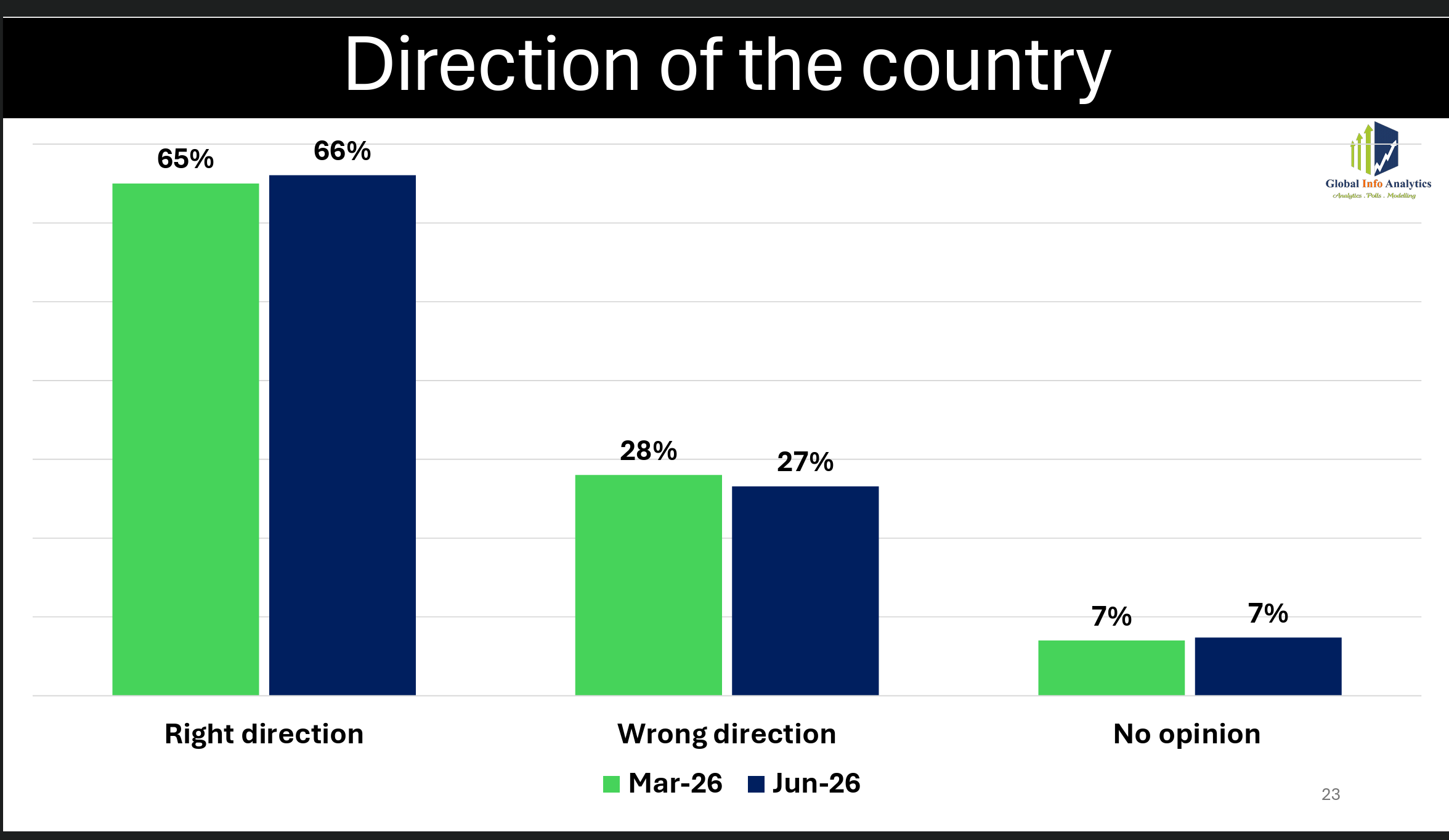
According to the findings, 66 percent of respondents believe Ghana is heading in the right direction, while 27 percent believe the country is moving in the wrong direction.
The results suggest growing public confidence in the country's economic and political trajectory under the current administration.
Perceptions of personal economic wellbeing have also improved.
Fifty-seven percent of respondents indicated that their standard of living is better today than it was a year ago, while 68 percent expressed optimism that their living conditions will continue to improve in the months ahead.
The positive outlook points to increasing public confidence in economic recovery efforts and government policies aimed at improving livelihoods.
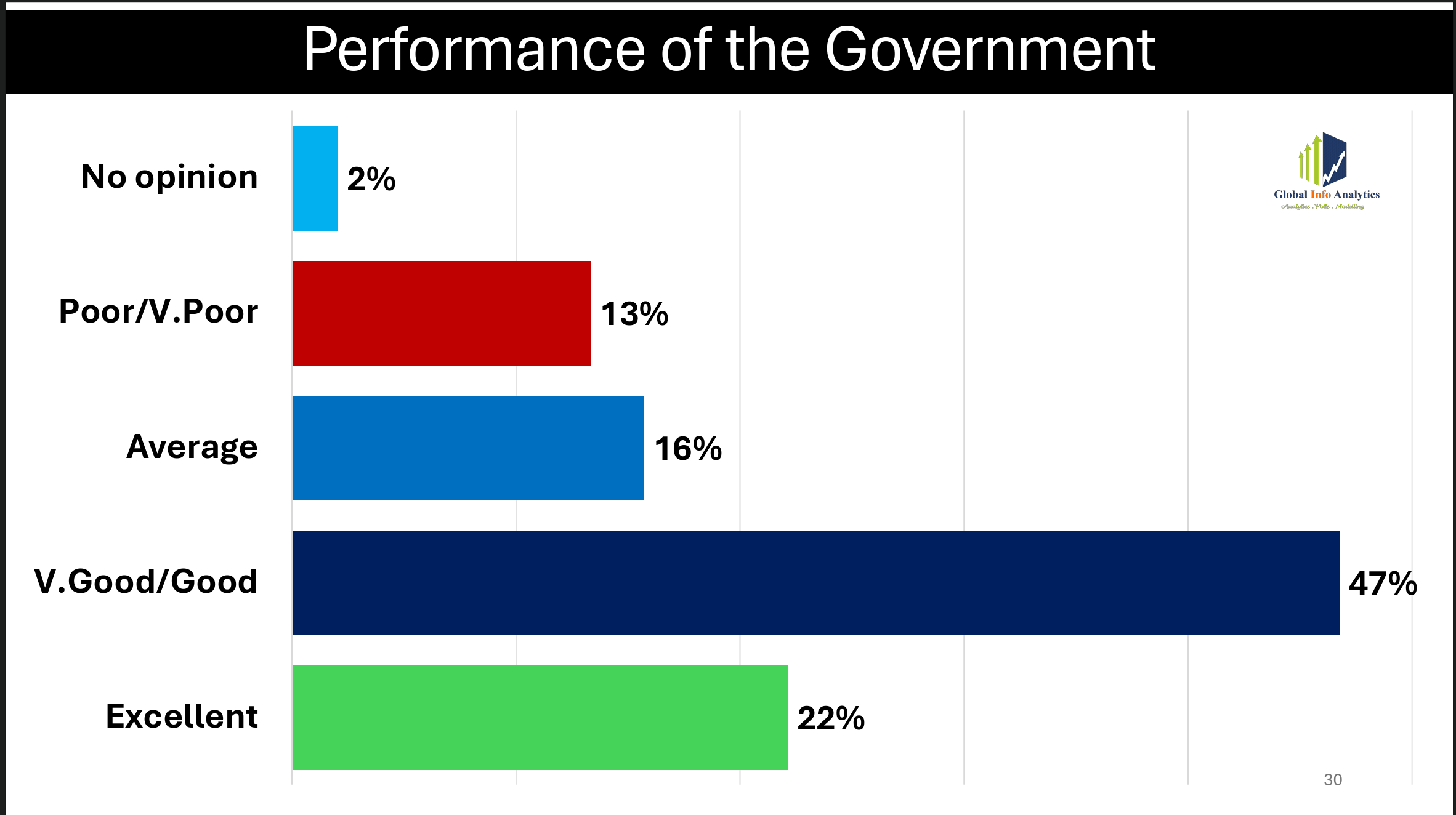
When respondents were asked to assess the overall performance of the government, nearly seven out of every ten respondents provided positive ratings.
Twenty-two percent rated the government’s performance as excellent, while an additional 47 percent described it as very good or good.
Only 13 percent of respondents rated the government’s performance as poor or very poor.
Analysts say these figures suggest that a significant majority of Ghanaians believe the administration is delivering on key governance and development priorities.
Despite the generally positive assessment, the poll highlights several challenges that continue to concern voters.
Unemployment emerged as the most pressing issue facing the country, with 44 percent of respondents identifying it as an area where the government is performing poorly.
The state of the economy followed at 32 percent, while persistent power outages, commonly referred to as dumsor, were cited by 29 percent of respondents.
When asked to identify the issues they most want the government to address, jobs and employment ranked highest at 54 percent, followed closely by the economy at 51 percent.
The findings indicate that while public confidence remains strong, voters expect sustained efforts to create jobs, stabilize economic conditions, and improve energy reliability.
The poll also points to growing public confidence in the government’s anti-corruption efforts.
More than half of respondents, representing 54 percent, believe corruption has reduced compared to previous years, while only 21 percent believe corruption has worsened.
Additionally, 62 percent of respondents said the government is doing enough to combat corruption, representing a modest increase from the 60 percent recorded in March 2026.
The survey also assessed public perceptions of corruption across state institutions.
The Ghana Police Service was perceived as the most corrupt institution, receiving a score of 6.45 out of 10.
Ministers and government officials recorded the lowest corruption perception score of 4.54, making them the least corrupt institution category measured in the survey.
The June 2026 National Tracking Poll was conducted between May 30 and June 12, 2026, and sampled 8,784 registered voters across all 16 regions and 84 constituencies.
Of the total respondents, 7,484 participated through face-to-face interviews, while 1,302 responded via online platforms.
According to Global InfoAnalytics, the survey was conducted with a confidence level of 99 percent and a margin of error of ±2.5 percent, making it one of the most extensive public opinion surveys undertaken in Ghana this year.
The findings provide an important snapshot of voter sentiment and public perceptions regarding governance, economic conditions, and national development as the Mahama administration continues its term in office.

Aikines Anyomi
News
Food
Politics
Technology
About Us
Download Our Mobile App

