
Sam Nartey George pushes for stronger ITU regional presence across all sectors
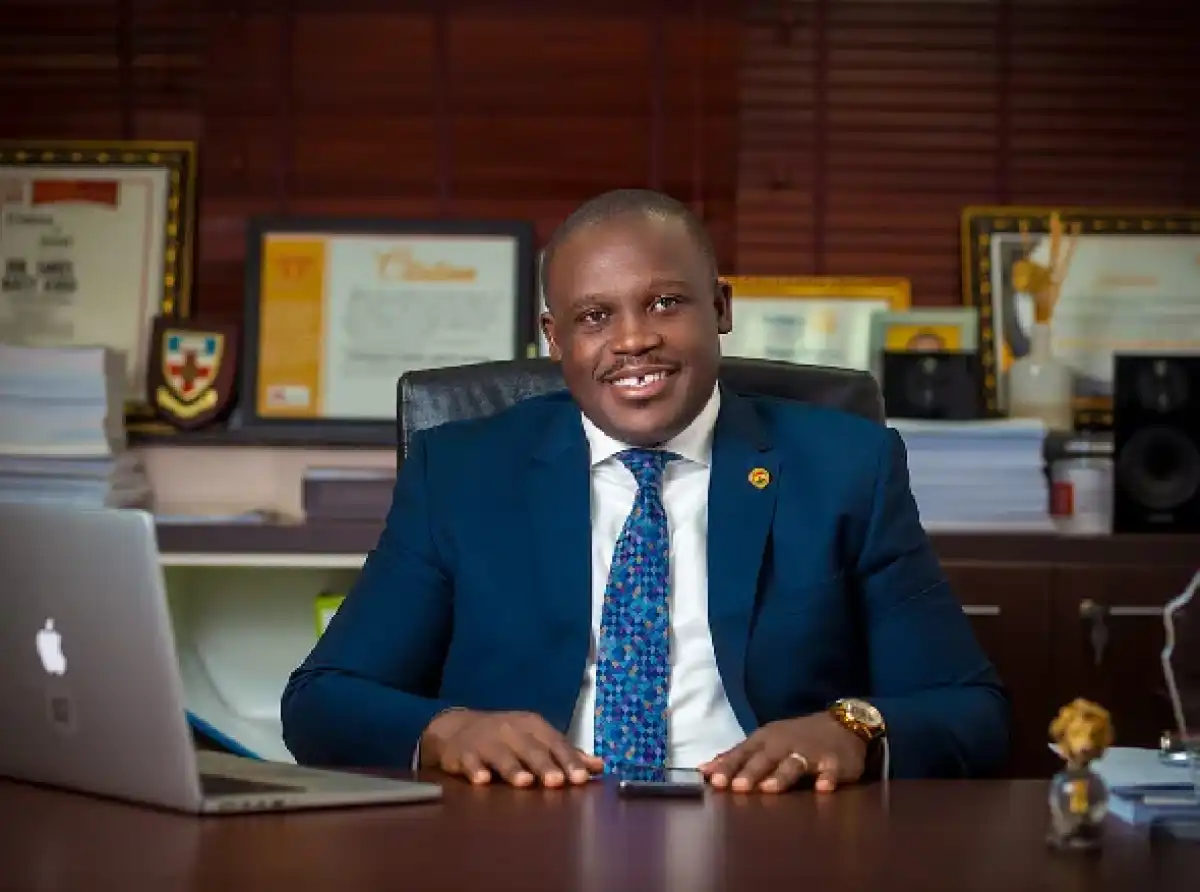
Ghana’s Minister for Communication, Digital Technology and Innovations, Sam Nartey George, has called for a more inclusive, balanced, and technically robust regional representation within the International Telecommunication Union (ITU), urging the global telecommunications body to ensure that all its key sectors are adequately represented across regional offices.
Delivering Ghana’s official submission at an ongoing ITU meeting in Geneva, the Minister acknowledged the extensive work captured in reports detailing the activities of ITU regional and area offices. He described these efforts as impactful across the organization’s six global regions, contributing meaningfully to the advancement of digital infrastructure and policy development among member states.
Mr. Nartey George commended the ITU for several initiatives that have directly benefited countries, particularly within Africa. He specifically highlighted Ghana’s participation in the Digital Financial Services Security Clinics, organized through the ITU’s African Regional Office in collaboration with the Telecommunication Standardization Bureau (TSB). According to him, these clinics provide practical, hands-on training for regulators and policymakers, playing a critical role in strengthening Ghana’s digital financial ecosystem and enhancing cybersecurity resilience.
“These are the kinds of capacity-building interventions our membership needs,” he noted, while urging the ITU to sustain and expand such programmes to reach more countries and stakeholders.
Despite these achievements, the Minister expressed concern over what he described as an imbalance in the ITU’s regional operational structure. He observed that most regional activities are currently driven by the Telecommunication Development Bureau (BDT). While acknowledging the importance of development-focused initiatives, he stressed that this approach does not fully address the increasingly complex and technical demands of modern telecommunications systems.
He explained that although regional offices were originally designed to deliver development support, rapid global technological advancements now require a more integrated framework—one that combines development, standardization, and radiocommunication expertise.
To address these gaps, Mr. Nartey George called for greater involvement from the ITU’s Radiocommunication Sector (ITU-R) and Telecommunication Standardization Sector (ITU-T) in regional operations. He emphasized that strengthening technical capacity at the regional level is essential for enabling member states to effectively manage emerging challenges in the digital space.
As part of his recommendations, the Minister proposed the deployment of dedicated technical experts from all ITU sectors within regional offices, the organization of regular sector-specific missions to member regions, and stronger coordination between ITU bureau directors and regional leadership structures.
While acknowledging that some staff from the Telecommunication Standardization Bureau have already been assigned to regional offices, he questioned when similar arrangements would be extended to the Radiocommunication Sector, particularly in Africa, where technical support is urgently needed.
He further identified several priority areas requiring immediate attention, including spectrum management, satellite coordination, and preparations for the upcoming World Radiocommunication Conference 2027. These areas, he noted, are critical to ensuring efficient use of telecommunications resources and supporting future technological innovation.
The Minister also urged that the ongoing review of the ITU’s regional presence should go beyond development-focused performance metrics. Instead, he called for a more comprehensive evaluation framework that assesses how effectively regional offices are addressing the technical and operational needs of member states across all three ITU sectors.
In addition, he recommended that the 27 Key Performance Indicators (KPIs) adopted by the ITU Council in 2025 be applied with a broader and more inclusive perspective, ensuring that technical capacity-building and sectoral balance are adequately measured.
Mr. Nartey George concluded by emphasizing the importance of a unified and inclusive ITU structure at the regional level. He noted that a truly effective regional presence must reflect the full mandate of the organization, rather than being dominated by a single bureau.
“A stronger regional presence is one that brings the whole of the ITU to the membership, not just one bureau,” he stressed.
He reaffirmed Ghana’s commitment to engaging constructively in ongoing discussions and reforms aimed at strengthening the ITU’s effectiveness, ensuring that all member states benefit from a more coordinated, inclusive, and technically empowered global telecommunications framework.

Aikines Anyomi
Author’s Posts
-
Overall cost pressures in construction are easing - Government Statistician
The Government Statistician,
John Jinapor showing strong leadership on power outages, deserves support – Prof Beyuo
The Member of Parliament for Lambussie,
Black Stars must build a team, not rely on talent – Daniel Opare
Former
Apr 30, 2026
-
Sam Nartey George pushes for stronger ITU regional presence across all sectors
Ghana’s Minister for Communication, Digital Technology and Innovations,
Vice President highlights the role of 24-hour economy policy in boosting productivity and creating jobs in shea sector
Vice President

News
Food
Politics
Technology
About Us
Download Our Mobile App

