The Ghana Revenue Authority (GRA) has acknowledged gaps in its stakeholder engagement ahead of the rollout of the Publica AI customs valuation system, admitting that its outreach may not have sufficiently reached individual traders despite formal consultations with industry groups prior to the system’s launch in March.
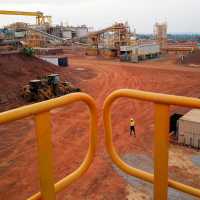
The Minerals Commission of Ghana has issued a firm directive to major international mining companies, including Newmont, AngloGold Ashanti, and Chinese-owned Zijin Mining Group, requiring them to transition their mining operations to local contractors by December 2026 or face possible sanctions. This development was confirmed by five sources with direct knowledge of the matter, as well as supporting documents reviewed by Reuters.
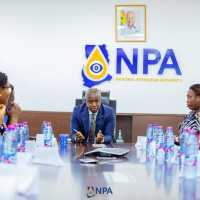
A new National Petroleum Authority (NPA) Bill, yet to be laid before Parliament, is expected to introduce major reforms to petroleum pricing and funding structures, including the introduction of an $80 levy on every metric tonne of Liquefied Petroleum Gas (LPG) to finance Ghana’s Cylinder Recirculation Model.
The Ghana Union of Traders’ Associations has expressed concern over the introduction of an artificial intelligence system at the country’s ports, saying key stakeholders were not adequately consulted before its rollout. The development has sparked debate within Ghana’s trading community about transparency, stakeholder engagement, and the potential economic impact of emerging technologies in trade facilitation.
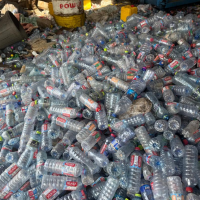
Waste management challenges in the Ashanti Region are expected to intensify as recent global policy shifts in the plastics sector disrupt local recycling operations, forcing some recyclers to shut down while others significantly scale back their activities.
Ghana’s domestic debt rose moderately from GH¢309.8 billion to GH¢333.8 billion by the end of December 2025, even as the country recorded an improvement in its domestic debt-to-Gross Domestic Product (GDP) ratio, according to the latest report by the Bank of Ghana.
The Director of Planning, Research, Monitoring and Evaluation at the National Pensions Regulatory Authority (NPRA), Philemon Laar, has strongly refuted claims by Member of Parliament Vincent Ekow Assafuah that the Authority directly manages pension funds in Ghana.
The Bulk Oil Storage and Transportation Company Limited (BOST) is projected to lose nearly GH₵40 million in April 2026 following the government’s decision to suspend the BOST margin on diesel, a move introduced to ease the burden of rising fuel prices on consumers.
Government’s recent fuel relief intervention is proving to be more nuanced than initially perceived, with a policy design that deliberately avoids cutting taxes while redistributing financial pressure within the petroleum sector.
On April 15, 2026, the Presidency announced that Ghana would absorb GH¢2.00 per litre on diesel and 36 pesewas per litre on petrol for an initial four-week period starting April 16. The move was introduced in response to rising global crude oil prices linked to geopolitical tensions involving the United States, Israel, and Iran. A policy review is expected after May 16.
Contrary to public expectations, the government did not reduce fuel taxes and levies. Instead, it targeted margins within the downstream petroleum pricing structure—a distinction with significant fiscal implications.
Fuel pricing in Ghana typically includes about GH¢4.20 per litre in combined taxes and margins:
Approximately GH¢2.90 represents taxes that go directly into government revenue
Around GH¢1.37 consists of margins allocated to sector institutions
These margins fund operations of agencies such as:
Bulk Oil Storage and Transportation Company (BOST)
National Petroleum Authority (NPA)
Petroleum Hub Development Corporation
They also support mechanisms like the Unified Petroleum Pricing Fund (UPPF), which stabilises fuel prices across regions.
By cutting margins instead of taxes, the government has preserved its revenue stream—avoiding the need to cut spending, raise alternative revenues, or later reintroduce taxes, a scenario previously seen during the COVID-19 levy era.
The structure of the intervention differs between petrol and diesel:
Petrol
Margins reduced moderately
Pump price lowered by 36 pesewas per litre
UPPF remains positive at about 66 pesewas per litre, meaning distribution costs are still covered
Diesel
Full margin of about GH¢1.37 removed
Additional support pushes total relief to GH¢2.00 per litre
UPPF turns negative (around –63 pesewas per litre)
This negative UPPF introduces a key shift: Oil Marketing Companies (OMCs) must now pre-finance fuel distribution costs, with reimbursement expected later through the NPA.
This arrangement creates a timing gap in the system. OMCs will absorb upfront logistics costs for several weeks—possibly longer—before recovering funds.
The expectation is that once margins are restored, excess inflows into the UPPF will be used to settle these obligations. However, any delay in reimbursement could create liquidity constraints and affect supply chain stability.
Meanwhile, state institutions that rely on margins face reduced inflows. Agencies such as BOST, NPA, and the Petroleum Hub Development Corporation may experience:
Tighter operational budgets
Delayed projects or reduced spending capacity
Increased financial strain on off-budget commitments
Estimates suggest that the margin cuts could result in about GH¢550 million in foregone inflows across the petroleum value chain within a month.
The policy reflects a deliberate trade-off:
Government position: Revenue remains protected in the short term
Sector impact: Financial pressure shifts to downstream institutions and OMCs
Rather than creating an immediate fiscal deficit, the government has effectively redistributed the burden within the petroleum ecosystem.
This approach may be strategic. A temporary liquidity squeeze within sector institutions is generally easier to reverse than a structural gap in the national budget.
The policy also raises broader questions about efficiency within the system.
For petrol, where the UPPF remains positive, it suggests that fuel distribution may be sustainable at lower cost levels than previously assumed. This could prompt further scrutiny of pricing structures and margin allocations in the future.
However, the sustainability of the current relief remains uncertain.
If extended beyond the initial four-week period:
Pressure on OMCs will intensify
Reimbursement obligations will grow
Financial strain on sector agencies could deepen
Timely settlements and careful monitoring will be critical to preventing disruptions in fuel supply.
For now, the government has successfully insulated its fiscal position while delivering short-term relief to consumers at the pump.
But the cost has not disappeared—it has been shifted downstream, where OMCs face liquidity challenges and state agencies operate with reduced financial buffers.
The coming weeks will determine whether this balancing act can be maintained or whether adjustments will be needed to sustain both fuel affordability and sector stability.
Business magnate and CEO of Engineers and Planners, Ibrahim Mahama, has unveiled an ambitious package of infrastructure projects for communities around the Damang Mine following his company’s official takeover of operations.
Stan Xoese Dogbe, Deputy Chief of Staff in charge of Operations, has commended Ghana’s exporters for their vital role in sustaining the country’s economic stability amid ongoing global and domestic challenges.
Ghana’s Finance Minister, Cassiel Ato Forson, has delivered a firm and confident message to global investors, stressing that the country’s economic recovery is not accidental but the result of deliberate, far-reaching reforms designed to ensure long-term stability.
Speaking during high-level investor engagements on the sidelines of the IMF/World Bank Spring Meetings, Dr. Forson underscored that Ghana’s recent economic gains are rooted in structural transformation rather than temporary policy adjustments.
“These are not cosmetic gains,” he stated. “They are outcomes of well-thought-through reforms, backed by laws and disciplined implementation.”
At the core of Ghana’s recovery strategy is a sweeping fiscal consolidation programme aimed at restoring macroeconomic stability and rebuilding investor confidence. A key highlight has been a significant reduction in the size of government, with the number of ministers cut from 123 to 60 as part of an aggressive cost-cutting initiative.
To strengthen public financial management, government has enforced a strict commitment authorization regime across Ministries, Departments, and Agencies (MDAs), ensuring that spending aligns with approved budgets. Amendments to the Public Financial Management Act have also introduced binding fiscal rules, including a 1.5% primary surplus target and a 45% debt ceiling—measures designed to anchor discipline and prevent fiscal slippages.
Institutional reforms have further reinforced accountability. The establishment of an independent Fiscal Council and an Office of Value for Money is intended to monitor compliance, eliminate wasteful expenditure, and enhance efficiency in public spending.
Dr. Forson also highlighted reforms in the management of public funds, including the uncapping of statutory funds to better align expenditures with national development priorities. Changes to the Petroleum Revenue Management framework are now directing more resources toward critical infrastructure projects.
On the revenue front, government has undertaken comprehensive tax administration reforms. These include improvements to the revenue refund system, as well as broader VAT and customs reforms aimed at plugging leakages and boosting domestic revenue mobilization.
Key sectors of the economy are also undergoing transformation. In the extractive industries, royalty structures in mining and petroleum have been revised to support large-scale infrastructure financing. Meanwhile, the energy sector has seen the implementation of a cash waterfall mechanism to improve financial flows and ensure long-term sustainability.
Additional efficiency measures include nationwide payroll audits and verification exercises to eliminate ghost names and reduce inefficiencies. Government has also rationalized overlapping programmes to improve targeting and reduce duplication. In the cocoa sector, reforms within COCOBOD are enhancing operational efficiency, while expanded social protection programmes are providing relief to vulnerable populations.
Beyond fiscal reforms, Ghana’s macroeconomic indicators are showing steady improvement. Economic growth has surpassed expectations, driven largely by strong performances in the services and agriculture sectors. Inflation is on a downward trajectory, supported by tight monetary policy, fiscal consolidation, and a strengthening local currency.
The country’s external position has also improved significantly, bolstered by robust gold and cocoa exports and increased international reserves, which have exceeded targets under the International Monetary Fund-supported programme.
“These reforms have translated into tangible market outcomes,” Dr. Forson noted, pointing to declining domestic and Eurobond yields, as well as recent sovereign credit rating upgrades—clear signals of renewed investor confidence.
He further emphasized that Ghana’s public debt outlook has improved considerably, with debt restructuring nearing completion and the country remaining current on its obligations.
Investor response has been overwhelmingly positive, with many commending Ghana’s “reset agenda” and acknowledging the depth and credibility of the reforms undertaken.
Looking ahead, Dr. Forson assured stakeholders that government remains committed to sustaining the recovery through continued fiscal discipline, deeper structural reforms, and strategic investments in productive sectors.
“The gains we achieved in 2025 provide a solid platform for continued recovery and policy predictability,” he said. “Our focus now is to consolidate these gains, strengthen confidence, and build a more resilient and inclusive economy.”
In the face of ongoing global uncertainties, Ghana is also prioritizing resilience-building measures, including export diversification, stronger fiscal buffers, enhanced energy security, and more efficient markets.
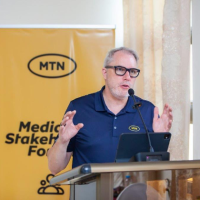
The Chief Executive Officer of MTN Ghana, Stephen Blewett, has firmly dismissed allegations that the company is involved in the theft or manipulation of customers’ mobile data, amid rising public concern over the rapid depletion of data bundles.




_thumbnail.jpg)