The National Petroleum Authority (NPA), in collaboration with the Chamber of Oil Marketing Companies (COMAC), has officially launched Safety Week 2026, a four-day initiative designed to strengthen collaboration and reinforce health, safety, security, and environmental (HSSE) standards across Ghana’s downstream petroleum sector.
The Commissioner-General of the Ghana Revenue Authority (GRA), Anthony Sarpong, has clarified that the newly introduced Publican AI system does not set the value of imported goods but rather identifies suspicious declarations for further review. The clarification comes amid growing concerns among importers and clearing agents about the role of automation in customs valuation.
The Commissioner-General of the Ghana Revenue Authority, Anthony Sarpong, has revealed that Ghana lost more than GH¢11 billion in revenue due to under-declaration and other irregularities at the country’s ports. The disclosure highlights long-standing challenges in revenue collection and the urgent need for systemic reforms within the import and customs sector.
In a move aimed at demonstrating leadership by example during a period of volatility, President John Mahama has issued a stern directive enforcing a total ban on fuel allowances and coupons for all ministers and senior government appointees. The decision is widely seen as part of broader efforts to reduce government expenditure and promote accountability at the highest levels of leadership.
Ghana’s energy security is expected to remain stable despite global oil market tensions, supported by the resumption of operations at the Tema Oil Refinery. This development is seen as a major boost to the country’s energy independence and resilience against external shocks. A report by Fitch Solutions, an international rating agency, said the development would reduce the economy’s exposure to external supply disruptions, particularly in periods of global uncertainty.
The CEO of the Chamber of Oil Marketing Companies (COMAC), Dr Riverson Oppong, is demanding full transparency on proceeds from the controversial “dumsor levy,” as government moves to ease fuel prices. The call comes amid growing public concern over rising living costs and pressure on policymakers to provide relief. Government has announced plans to remove some taxes and margins on fuel to cushion consumers, a move expected to influence transport fares and general market prices.
Ghana Oil Company Limited (GOIL) has announced a price adjustment for its premium petrol product, Super XP 95, as part of ongoing changes within Ghana’s fuel market.
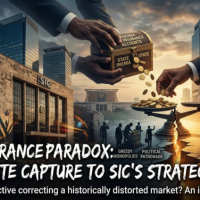
For years, Ghana’s insurance industry has operated less as a truly competitive marketplace and more as a tightly controlled ecosystem shaped by political patronage, selective access, and entrenched interests. Rather than fostering fair competition, the system has often resembled an exclusive network where a privileged few benefit disproportionately from state-linked opportunities.
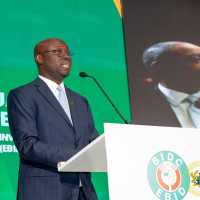
It is my singular honour and privilege, as Chairman of the Board of Governors, to warmly welcome you all to the 24th Ordinary Session of the Board of Governors of the ECOWAS Bank for Investment and Development (EBID).
The Chief Executive Officer of the National Petroleum Authority (NPA), Mr. Godwin Edudzi Tamakloe, has assured the public of Ghana’s fuel security, revealing that the country currently holds sufficient reserves to sustain consumption in the short to medium term.
According to him, Ghana has approximately eight weeks’ worth of diesel and about 6.8 weeks’ supply of petrol available. This, he explained, reflects the Authority’s ongoing efforts to ensure stability in the downstream petroleum sector and prevent any potential supply disruptions.
Mr. Tamakloe noted that the NPA continues to closely monitor global petroleum supply trends and local consumption patterns to maintain adequate stock levels at all times. He emphasized that maintaining strategic fuel reserves is critical, especially in the face of global market uncertainties and potential logistical challenges.
He further assured industry players and the general public that the Authority is working collaboratively with bulk oil distributors, oil marketing companies, and other stakeholders to guarantee uninterrupted fuel availability across the country.
The announcement is expected to boost public confidence, particularly amid concerns about global fuel supply fluctuations, as the NPA strengthens measures to ensure energy security and operational resilience within Ghana’s petroleum sector.
The National Petroleum Authority (NPA), in collaboration with the Chamber of Oil Marketing Companies (COMAC), has officially launched Safety Week 2026, a four-day initiative designed to deepen collaboration and strengthen health, safety, security, and environmental (HSSE) standards within Ghana’s downstream petroleum sector.
Ibrahim Mahama stands as a compelling example of what disciplined ambition, resilience, and vision can achieve in an environment often shaped by uncertainty.
The Chairman of the Public Interest and Accountability Committee (PIAC), Richard Ellimah, has revealed that a total of US$434.55 million from Ghana’s petroleum revenue has been allocated through the Annual Budget Funding Amount (ABFA) to support the government’s flagship infrastructure initiative, the “Big Push” programme.
_thumbnail.jpg)

_thumbnail.jpg)
_thumbnail.jpg)

_thumbnail.jpeg)