
Jubilee House: The Value for Money Office Act introduces stricter oversight mechanisms for public sector spending
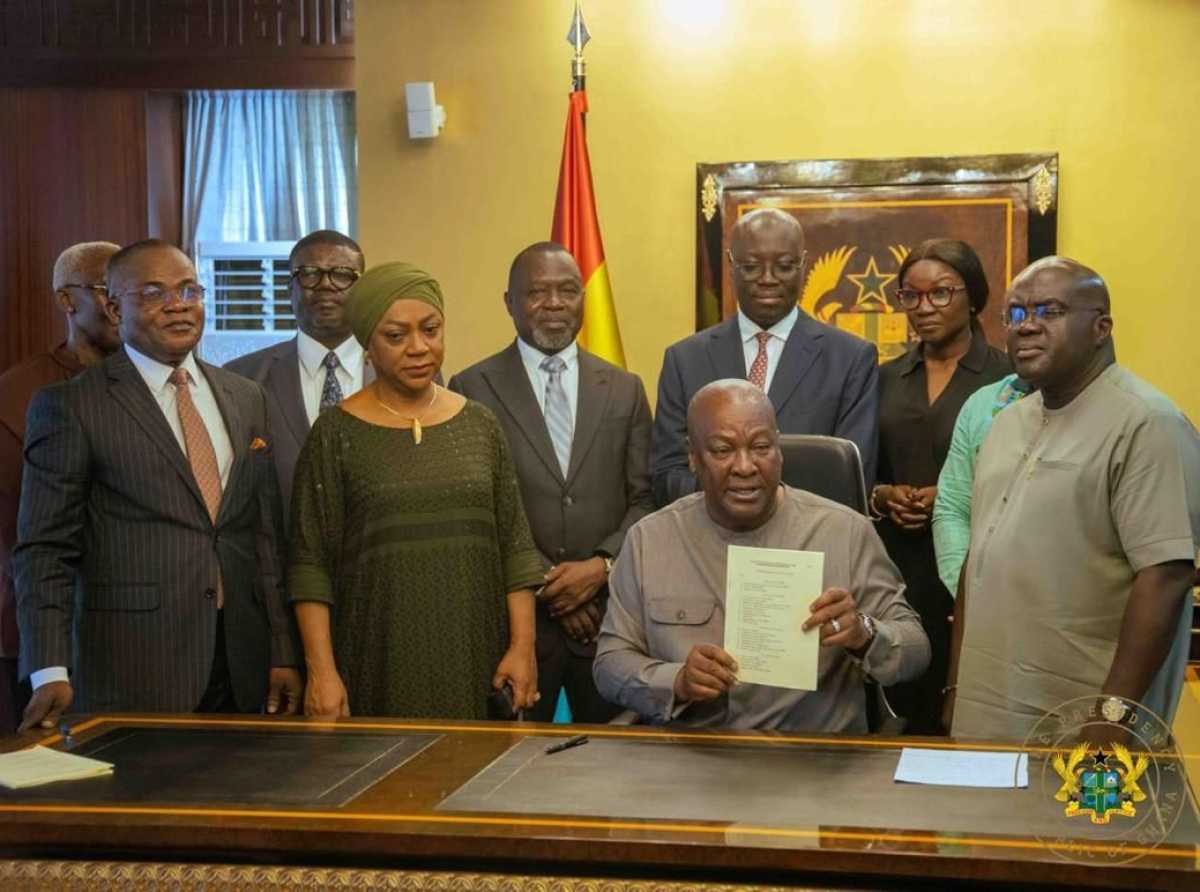
The Presidency at Jubilee House has announced that the newly enacted Value for Money Office Act will introduce stricter oversight mechanisms for public sector spending as part of government efforts to promote transparency and ensure greater accountability in the use of public funds.
President John Dramani Mahama officially assented to the bill on Monday, May 11, marking another major step in the government’s public financial management reform agenda.
Following the signing ceremony, the Presidency stated in a Facebook post that the legislation is intended to strengthen monitoring and evaluation of government expenditure while ensuring that public funds are used efficiently and responsibly.
“The newly enacted Value for Money Office Act also introduces stricter oversight mechanisms for public sector spending, with a focus on promoting transparency and ensuring greater accountability in the use of public funds,” the statement from Jubilee House said.
The new Office for Value for Money is expected to serve as a key institution responsible for reviewing public procurement, monitoring government contracts, and assessing whether state-funded projects deliver value to taxpayers.
Speaking to journalists after the bill was signed into law, Finance Minister Cassiel Ato Forson expressed confidence that the office would significantly reduce inflated contracts, eliminate wasteful government spending, and strengthen fiscal discipline across public institutions.
“The Office for Value for Money will stop inflation and padding of contracts,” Dr Forson stated.
According to the Finance Minister, the institution will closely scrutinise public procurement processes and evaluate major government projects to ensure that contract values accurately reflect actual project costs and expected outcomes.
He explained that the office is expected to generate substantial savings for the government by identifying inefficiencies, preventing financial leakages, and improving oversight of public expenditure.
Dr Forson further noted that the cost savings achieved through the work of the office would eventually create additional fiscal space for government investment in critical sectors of the economy such as infrastructure, education, healthcare, and social development.
“And obviously create fiscal space that will be used to develop other sectors of the economy,” he added.
The establishment of the Office for Value for Money forms part of the government’s broader reforms aimed at improving transparency, accountability, and efficiency in public financial management.
Analysts believe the institution could play a crucial role in tackling concerns over inflated public contracts, excessive project costs, and misuse of taxpayer funds — issues that have consistently generated public debate in Ghana over the years.
The legislation is also expected to reinforce confidence in government spending systems by introducing stronger accountability structures and improving oversight of procurement and expenditure decisions within the public sector.
Supporters of the initiative say the Office for Value for Money could help improve budget credibility and enhance public trust if implemented effectively and independently.
The law is among several key reform bills recently signed by President Mahama as part of efforts to strengthen governance institutions and improve public sector efficiency in Ghana.

Aikines Anyomi
Author’s Posts
-
East Legon businessman arrested over alleged drug-facilitated sexual abuse and non-consensual video sharing
The Cyber Crime Unit of the
Level 100 students raise concerns over delayed ‘No-Fees-Stress’ refunds
Some Level 100 students under the 2026 beneficiary batch of the government’s no-fees-stress policy ...
May 12, 2026
-
WAEC confirms arrest of 43 teachers over BECE exam malpractice
The
May 12, 2026
-
Afenyo-Markin: NDC promised energy sector reforms but increased tariffs instead
Minority Leader
Black Stars can exceed expectations at the 2026 World Cup – Afenyo-Markin
Minority Leader

News
Food
Politics
Technology
About Us
Download Our Mobile App

